Illustrative

Case studies

The table lists the transformations a flow discussion usually starts from. A production figure is added only when Caxyo has documented the run.

Where control usually matters

Each row names the batch constraint and the question a flow review asks. Scale stays open until a project defines it.

Reaction classes with the usual batch constraint and the question a flow review asks. Production scale is not stated.
ClassTransformationUsual batch constraintFlow reviewScale
NitrationActivated aromatic, mixed acidHeat release and regioselectivity. In a batch vessel the addition rate is often set by how fast the jacket can cool.Whether hold-up and the heat profile are the limit, and how the isomer mix is sampled.Per project
NitrationToluene, mixed acidA second nitration and the isomer distribution.Flow is considered when hold-up or the heat profile is the limit on this step.Per project
OxidationSecondary alcohol to a ketoneOxidant inventory and temperature.The quench is designed with the reactor, so the reaction is stopped in the same train.Per project
HydrogenationNitroarene to the anilineGas-liquid contact, catalyst and pressure.A flow hydrogenator is assessed as its own safety case, separate from a batch autoclave.Per project
Reaction classes a discussion often starts from. Scale is set on the project. These rows are not customer results and not a list of qualified processes. On a phone, scroll the table sideways.

How a real study would be written

The examples below use the same discipline: situation, constraint, and the data that is still missing.

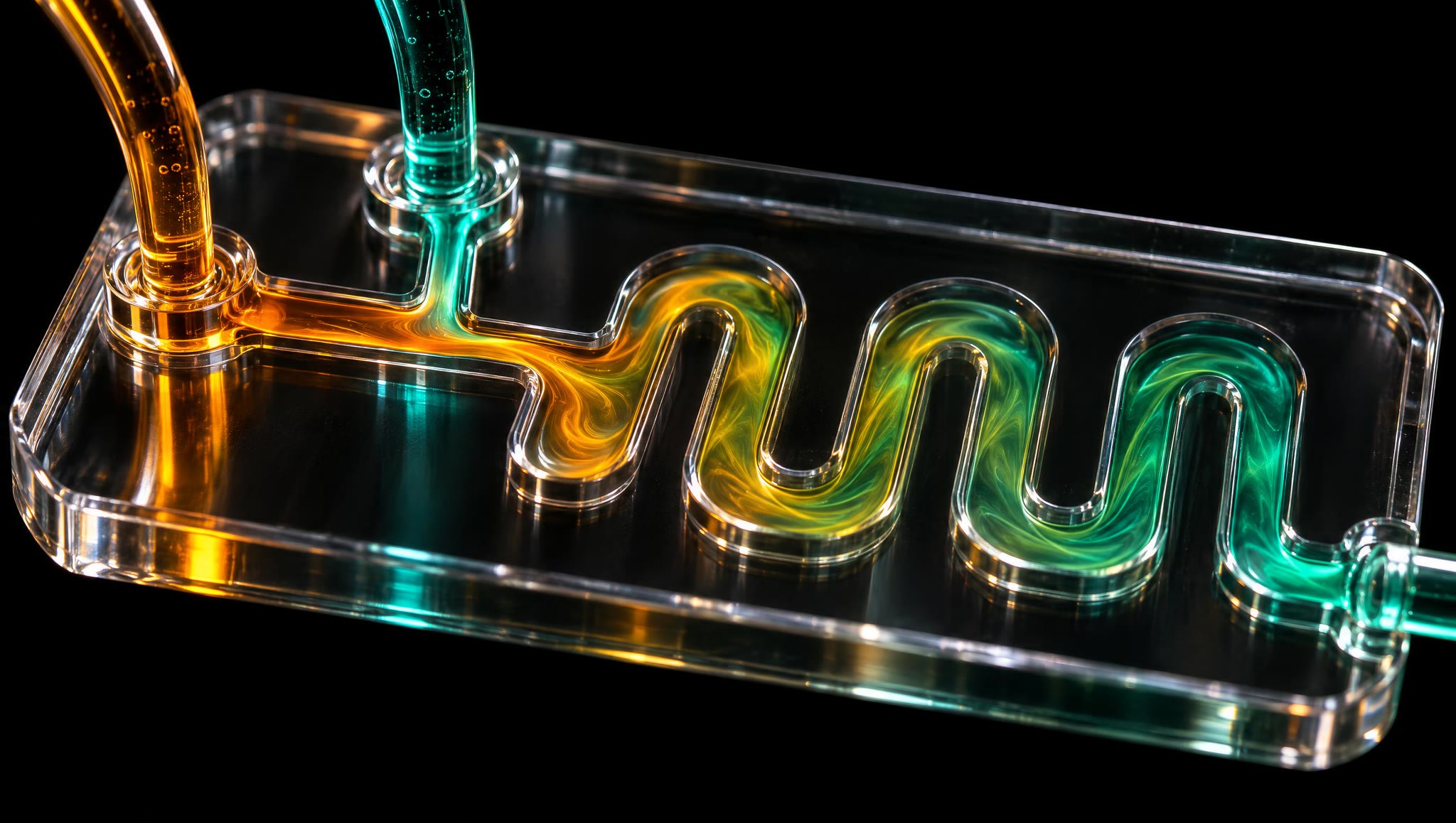
Illustration: two liquids meeting and mixing in a glass channel plateIllustrative

01 / 04

Converting a high-heat batch step into a controlled flow process

A batch reaction generated a sharp heat-release profile and required slow addition, extended cooling and conservative batch sizing.

Review reaction calorimetry, mixing, concentration, feed strategy, residence time, heat-transfer requirements and quench design. Screen a continuous reactor architecture and establish a controlled operating window.
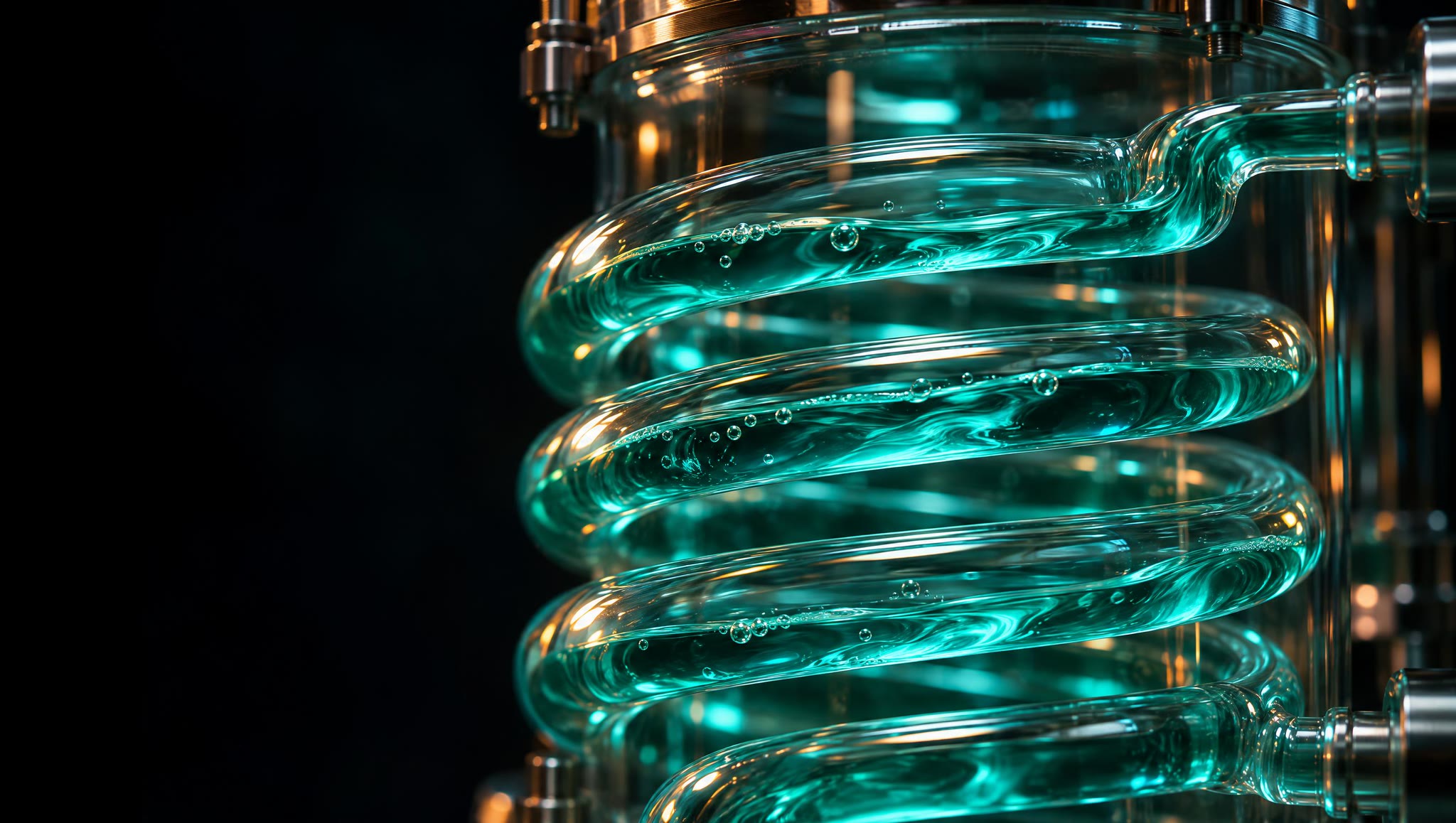

Illustration: a teal liquid flowing through a glass coil reactorIllustrative

02 / 04

Managing an unstable intermediate with rapid reaction and controlled residence time

The intermediate was difficult to hold and sensitive to temperature and residence time.

Use controlled low-temperature dosing, rapid mixing, short residence time and an integrated quench or downstream step.

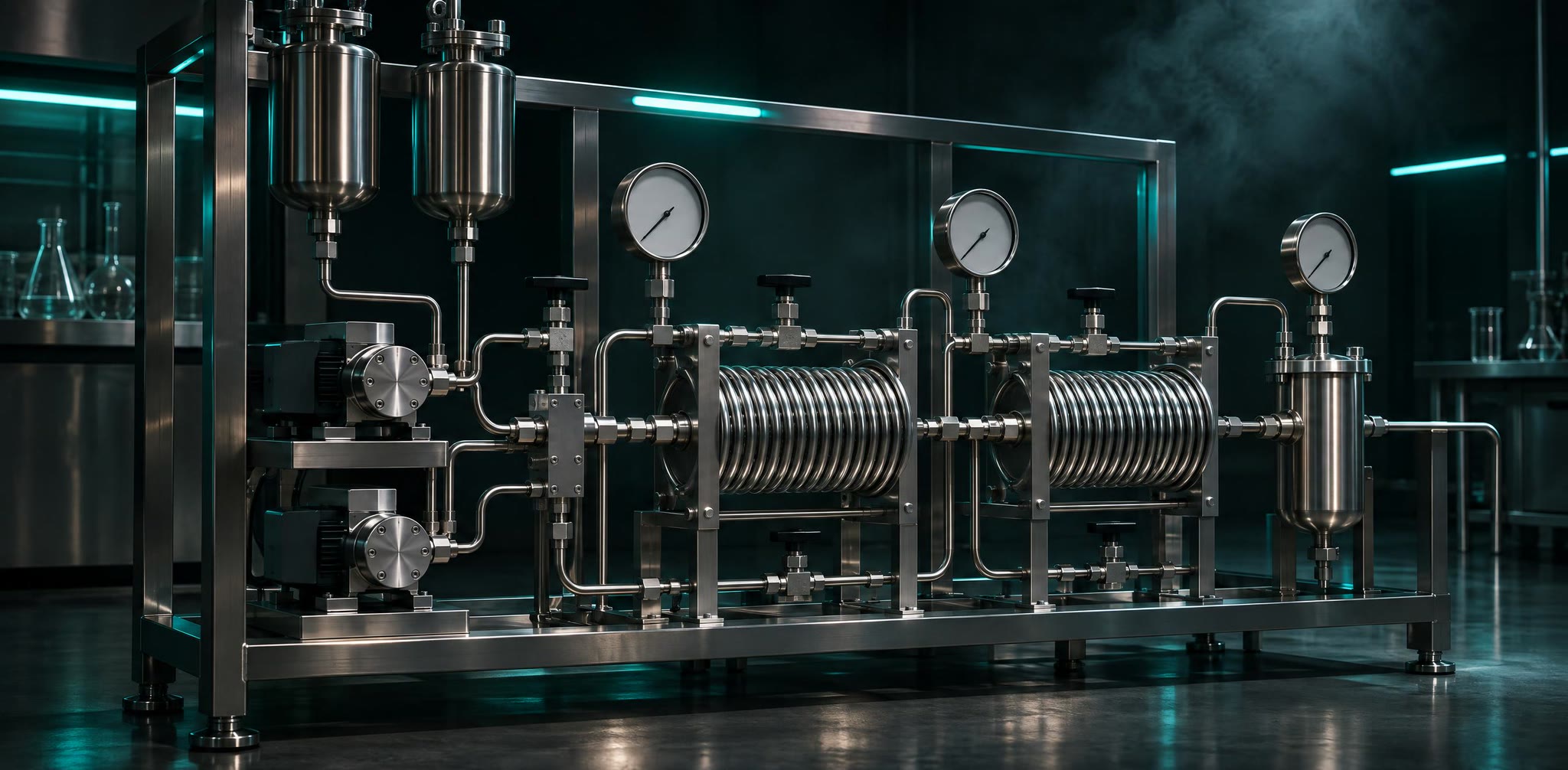
Illustration: a stainless-steel flow reactor skid with coils and gaugesIllustrative

03 / 04

Using flow only where it creates a manufacturing advantage

Not every step benefited from continuous operation. One hazardous transformation was the principal scale-up constraint.

Retain robust batch operations and insert a flow reactor for the critical transformation, creating a hybrid architecture.

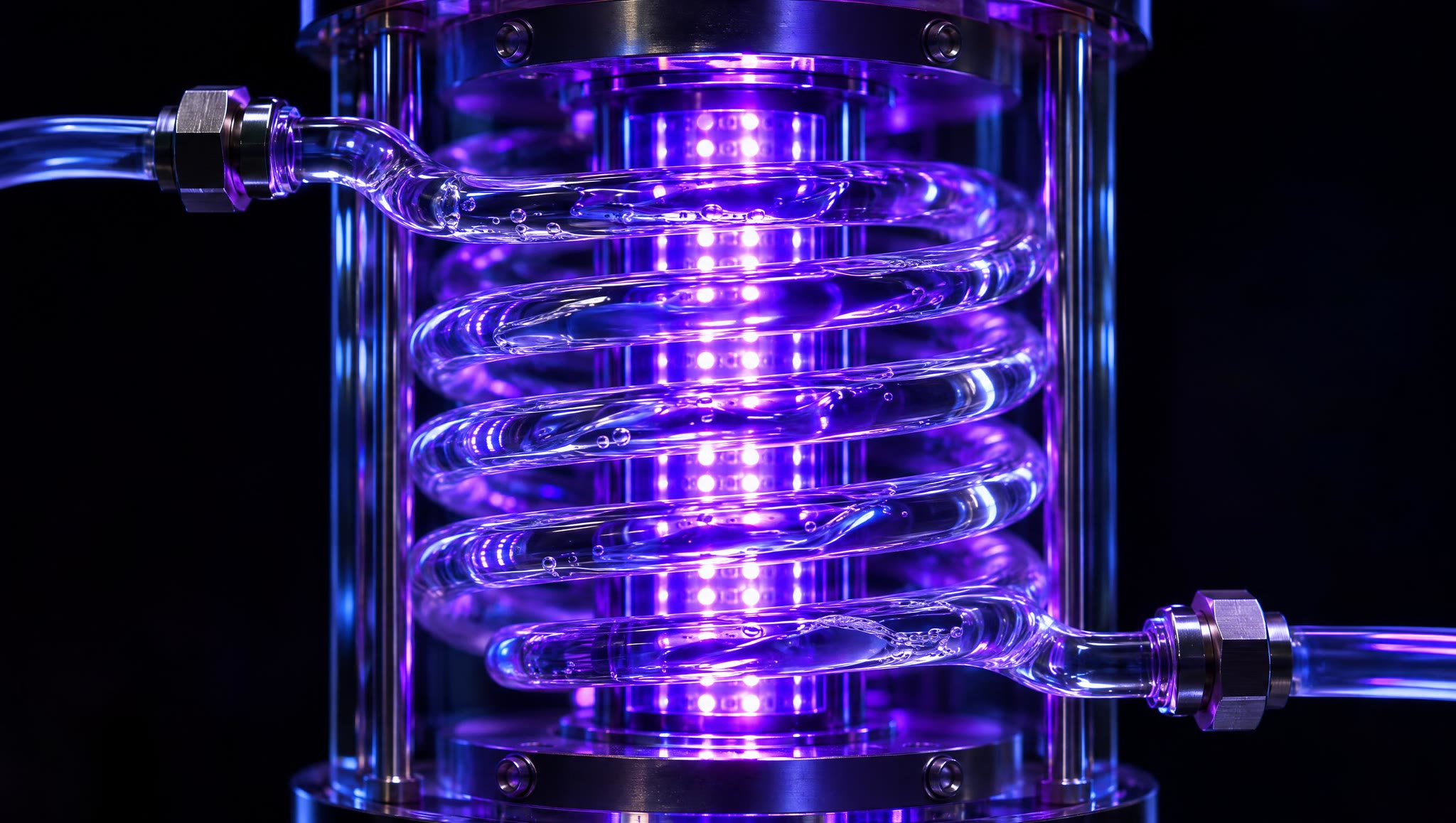
Illustration: a glass coil photoreactor lit in violet lightIllustrative

04 / 04

From laboratory photochemistry to a scalable reactor concept

Light penetration, reactor geometry, residence time and heat management limited batch scale-up.

Evaluate light path, residence time, optical density, cooling and a continuous irradiation configuration.

Next step

Have a process that is difficult to scale?

Share the chemistry, the current process, the desired scale and the main technical constraint. The team will review the opportunity and suggest a practical next step.