
Solutions · Data and AI
Development stretches when every variable is explored one experiment at a time. Flow data and model-guided experiment design shorten the search.
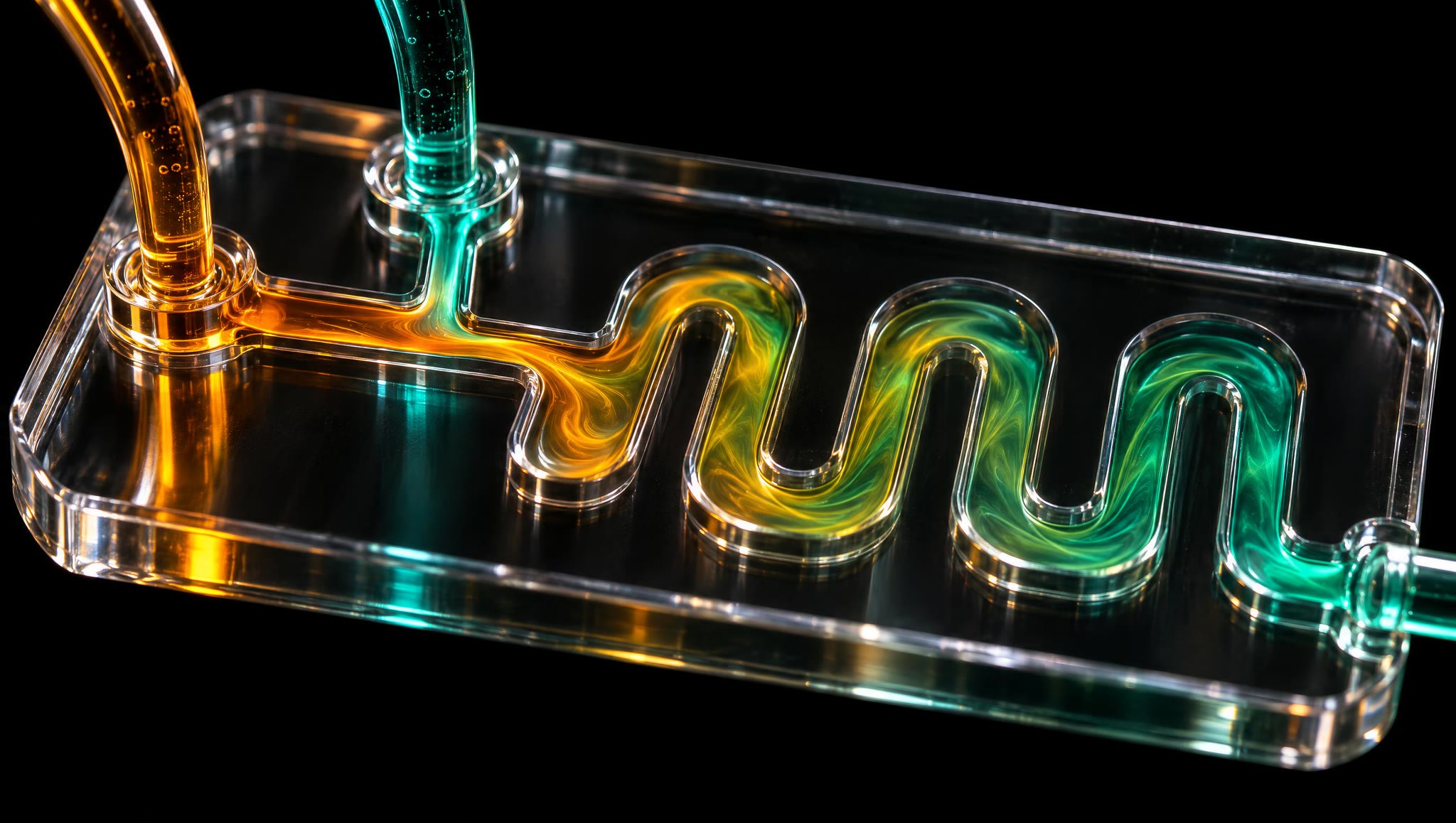
A flow system changes conditions in minutes and records what happened. Statistical and AI models read that data and propose the next experiment, so the operating window is found in fewer runs.
Read the detailHide the detail
Design of experiments and model-guided optimisation are used where they earn their place. The model suggests and the chemist decides. Every recommended condition is run and checked, and nothing is reported unless the experiment behind it exists.
The pain
Where development time goes.
- 01One-variable-at-a-time screening
- 02Days lost waiting on batch turnarounds
- 03Early work that consumes scarce material
- 04Operating windows found late, or not at all
- 05Knowledge that lives in notebooks, not in data
With data and AI
Let the data choose the next experiment.
- 01
Agree the objective
Yield, selectivity, impurity limits and throughput are fixed before the first run.
- 02
Collect clean data
Flow rate, temperature, pressure and residence time are logged with each analytical result.
- 03
Let the model propose
Statistical and AI models rank the next conditions to try. The chemist approves each step.
- 04
Confirm the window
The proposed operating window is run, repeated and written into the development report.
The model suggests. The chemist decides. Every recommendation is run and checked before it is relied on.

Next step
Bring us the problem.
Share the chemistry, the current process and where it hurts. We will suggest a practical next step.