Solutions · By chemistry
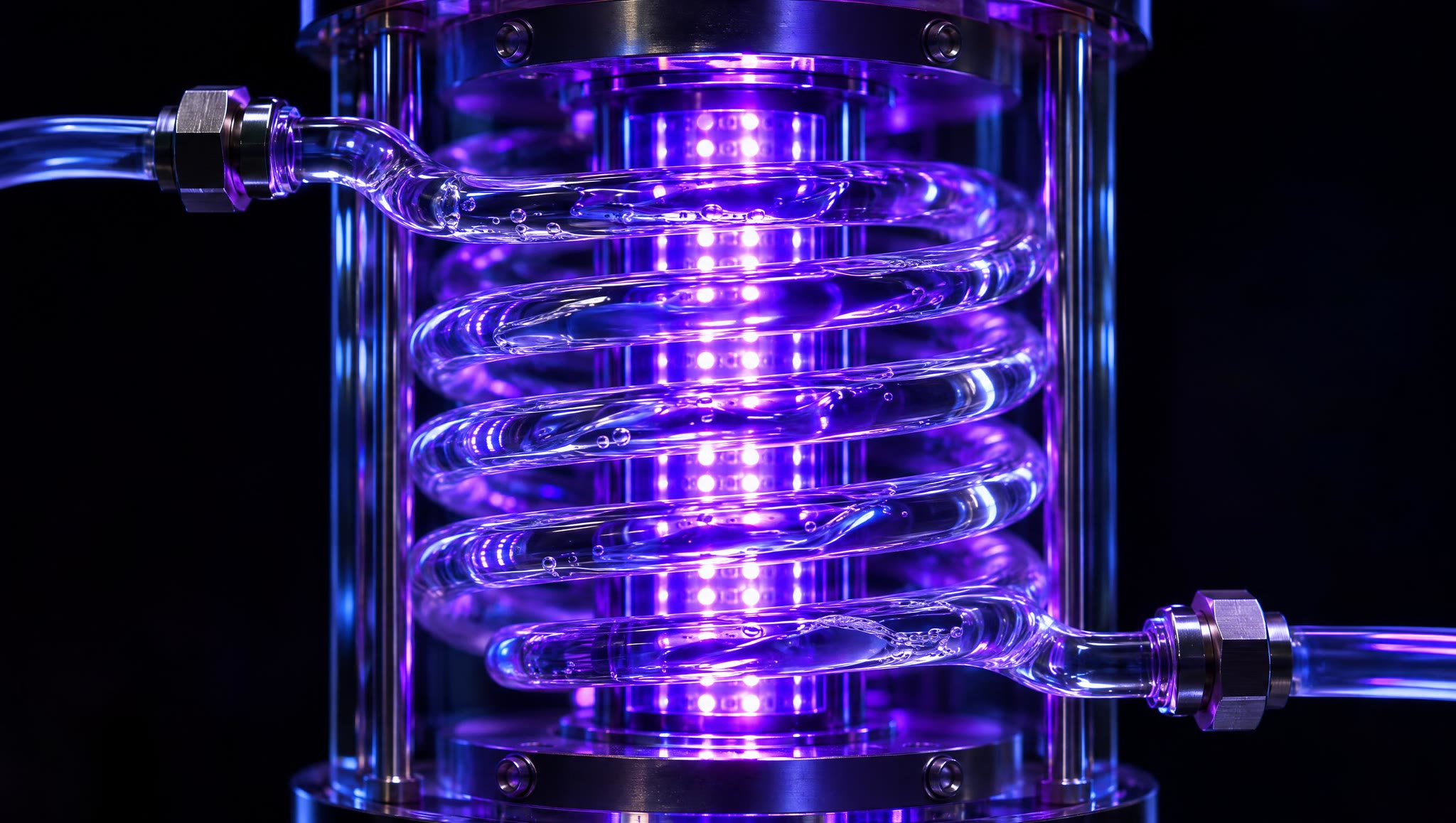
Light does not travel far into a reacting solution. A reaction that works in a small flask can stall in a large vessel for that reason alone.
In photochemistry the scale-up problem is the light path. A flow reactor keeps the irradiated layer thin and the residence time defined, so each part of the stream sees a similar dose of light.
Read the detailHide the detail
Reactor geometry, optical density, wavelength, cooling and residence time are evaluated together. Lamps produce heat, and too much light makes by-products, so thermal control and light delivery are designed as one system.
The pain
Why photochemistry stalls.
- 01Light penetration that drops with vessel size
- 02Uneven irradiation and over-exposed product
- 03Heat from the light source
- 04Long irradiation times in batch
- 05Results that do not transfer between set-ups
The approach
Start from the light path.
- 01
Characterise the light path
Absorbance, concentration and wavelength decide how thin the irradiated layer must be.
- 02
Select the reactor geometry
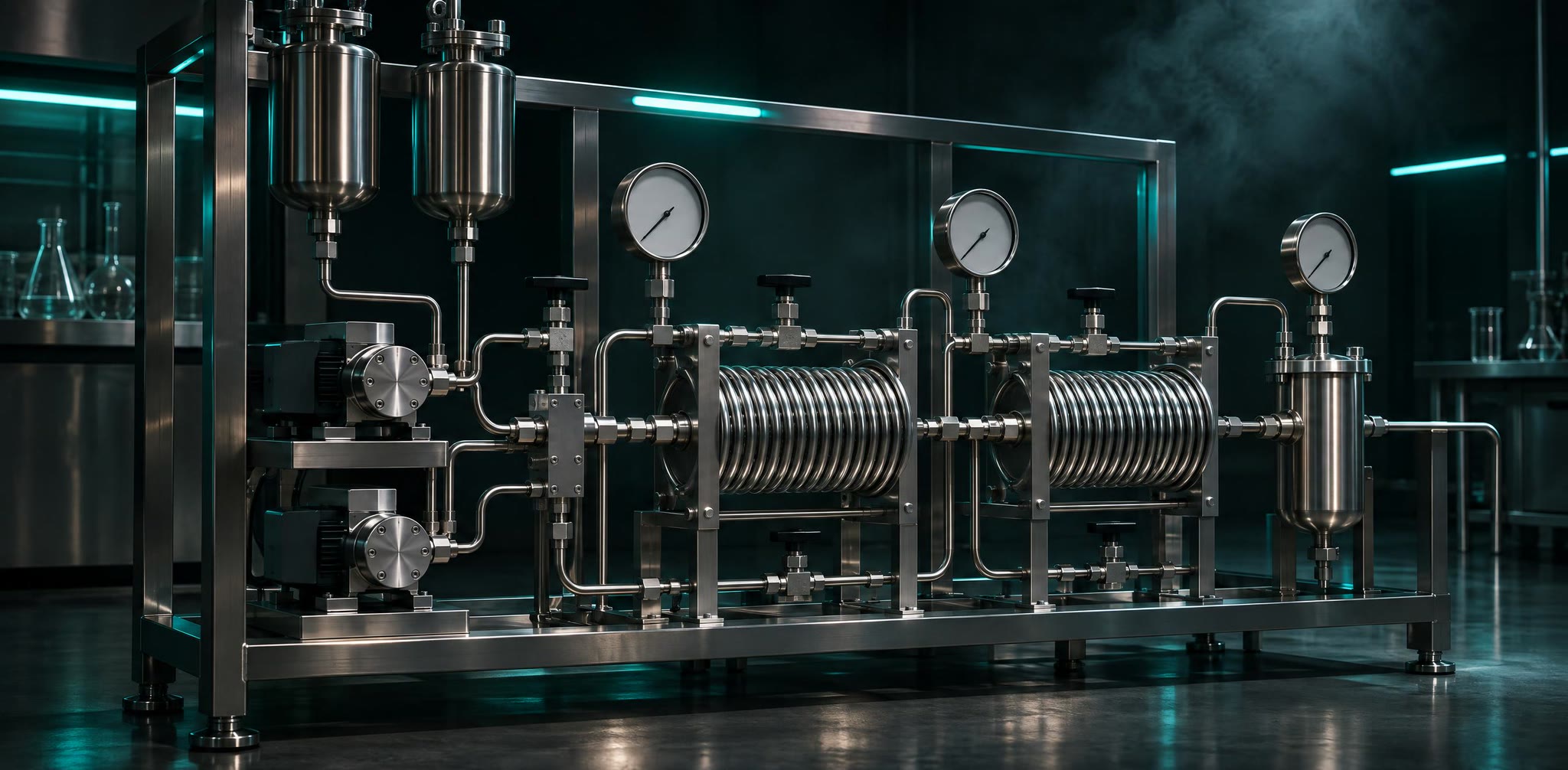
A coil or plate concept is chosen for the chemistry, with cooling built in.
- 03
Map dose against selectivity
Residence time and light intensity are screened to find where conversion is complete and by-products stay low.
- 04
Write the scale-up logic
The package states whether throughput comes from longer runs, larger modules or numbering-up.

Next step
Bring us the problem.
Share the chemistry, the current process and where it hurts. We will suggest a practical next step.