Solutions · By chemistry
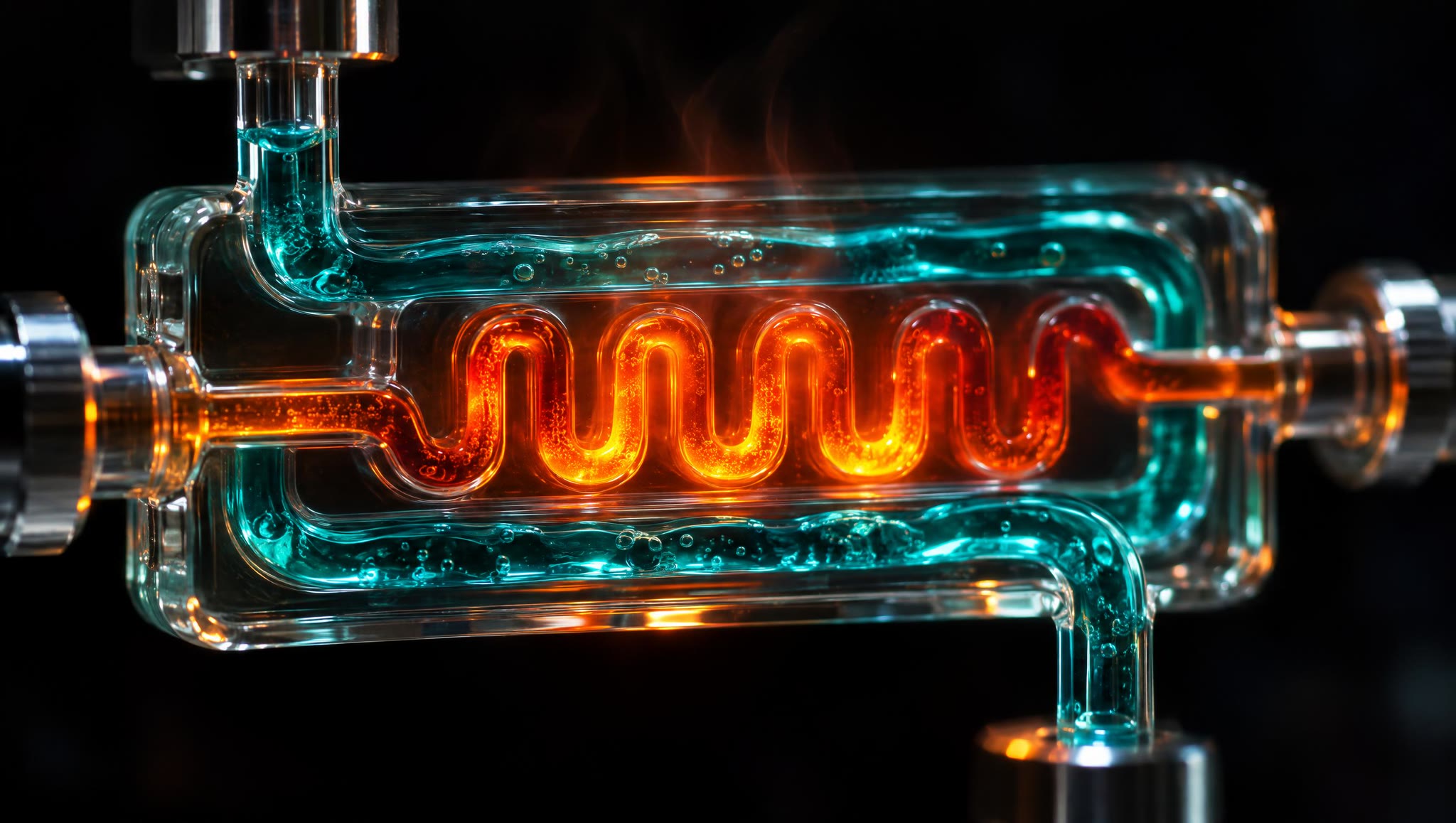
Nitration, sulfonation, oxidation and other fast, heat-releasing steps are usually limited by how quickly a vessel can be cooled. Flow changes that limit.
In a batch vessel, the rate of a strongly exothermic reaction is often set by the jacket and not by the chemistry. A flow reactor holds far less material at reaction conditions and removes heat through a much larger wall area per volume.
Read the detailHide the detail
That can turn a slow, cautious addition into a controlled continuous step. It does not remove the hazard. Calorimetry, materials compatibility, blockage risk and the behaviour of the system when flow stops belong in the same review as the reactor sketch. Energetic chemistry is taken on only with a formal process-safety assessment.
The pain
What heat does in batch.
- 01Addition rate set by cooling capacity
- 02Hot spots and lost selectivity on scale
- 03A large inventory of reactive material in one vessel
- 04Conservative batch sizes and long cycle times
- 05Isomer and over-reaction impurities
The approach
Design around the heat release.
- 01
Read the heat release
Calorimetry data, the addition profile and known failure modes are reviewed before a reactor is chosen.
- 02
Match the reactor to the heat
Residence time, mixing and heat-transfer area are sized to the reaction, with the quench designed in the same train.
- 03
Find the operating window
Temperature, concentration and flow are screened at laboratory scale to map yield, selectivity and safe limits.
- 04
Decide the architecture
Flow for the critical step, batch where batch is already robust. The package says what must stay constant on scale.

Next step
Bring us the problem.
Share the chemistry, the current process and where it hurts. We will suggest a practical next step.